Gods of Olympus: When Heaven Wore Gold
The Greeks didn't imagine their gods as distant. They made them jealous, flawed, powerful — and we shape them the same way, one piece at a time.
Gods of Olympus: When Heaven Wore Gold
The Greeks did not imagine their gods as distant. They made them jealous, flawed, powerful — because that is what power looks like when it wears a human face.
There is a mountain in Thessaly where the clouds never quite lift. Today we call it weather. The ancients called it Olympus. It wasn't a place you climbed to — it was a presence you felt.
"The gods did not create humans in their image. Humans created gods in theirs — and then spent millennia regretting it."
The Throne Nobody Gives
Zeus did not inherit his throne. He took it — from a father who swallowed his own children to avoid being replaced. From a lineage where power was never given, only seized. There is something uncomfortably modern about that story. The son who dismantles his father's empire. The patriarch who consumes his own children rather than share power.
That tension has always stayed with me. When I work on a Zeus piece, I don't begin with the lightning bolt. I begin with weight. The kind of weight that comes with holding something you were never meant to have — and knowing what it cost to get there. Every line in the wax model carries that tension — authority and guilt, braided together like the serpents on Hermes' staff.
"Power is never given. It is taken — and then it must be carried. That is the story Zeus tells, whether he wants to or not."
Athena Never Asked Permission
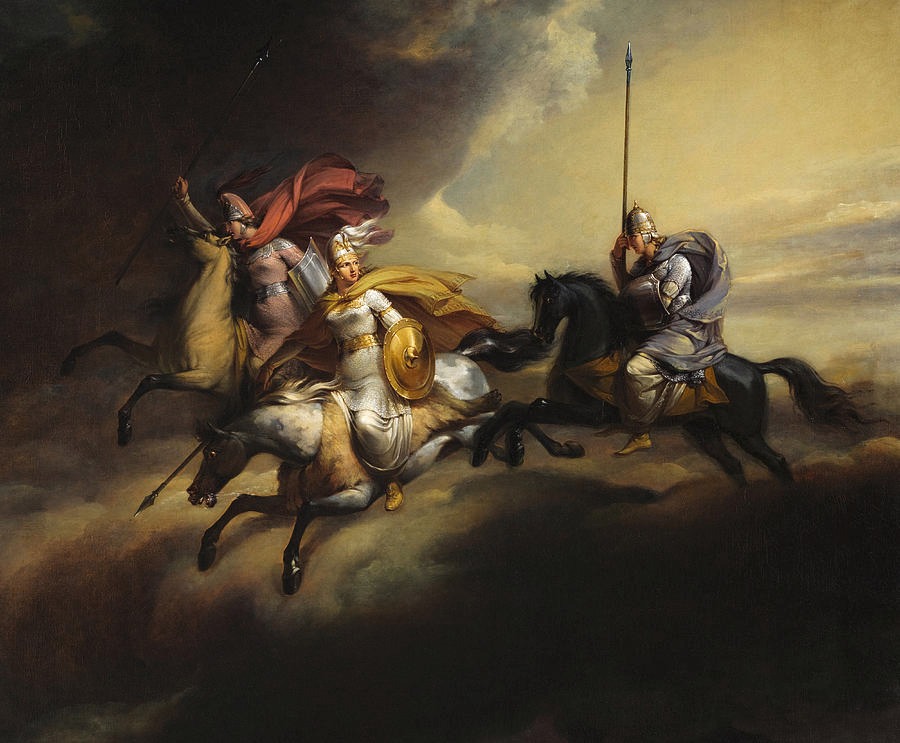
She didn't grow into power. She arrived with it. Born fully formed from Zeus's skull — armored, screaming, and ready. No mother. No childhood. No softness. Athena arrived in the world the way a sword arrives in a scabbard — already finished, already dangerous.
But what makes Athena enduring is not strength — it's restraint. She was the goddess of wisdom, of weaving, of the olive tree. She chose the useful over the dramatic. She builds where others destroy. She thinks where others react. While Ares burned cities, Athena built them. While Poseidon flooded coastlines, Athena planted groves.
"Strength without strategy is just weather. Athena understood that the real war is always fought in the mind."
When I shape her image, I try to hold both sides at once: clarity and danger, patience and precision. The owl's patient gaze paired with the spear's lethal edge. Not loud power — but controlled power. It is not a piece for the loud. It is for those who win before the first blow is struck.
Medusa Was Not the Monster
Some stories were told by the wrong voices. We need to talk about Medusa — not the monster from children's books, but the woman. A priestess of Athena, violated by Poseidon in Athena's own temple. And for this crime, she was punished. Her beauty turned to horror. Her hair to serpents. Her gaze to stone.
Medusa was not chaos. She was consequence. A woman turned into something feared — not because she deserved it, but because someone needed her to be.
Over time, her meaning changed. Modern readings have reclaimed her. Medusa is no longer the creature you flee from — she is the boundary you do not cross. A refusal. A gaze that doesn't look away anymore. Her gaze does not destroy randomly. It freezes what threatens. It confronts what refuses to look away.
"She has stopped running. She has stopped apologizing. This is what survival looks like when it finally stands still."
When I work on Medusa, I don't try to make her terrifying. I try to make her still. I give her eyes that are open — not in rage, but in refusal. There is a different kind of strength in that.
Why Gold
Gold was never just about wealth. To the Greeks, it meant something that doesn't fade. Something that outlasts time, bodies, and memory. The flesh rots. Bronze corrodes. But gold endures. When Homer called the dawn "rosy-fingered," he meant it literally — the sky was blushing with the same metal that adorned the temples.
I think about that often while working. Most of my pieces are made in sterling silver, sometimes finished in gold. Not to imitate something else — but to give the piece a tone that fits what it carries.
Because these stories have already endured for thousands of years. The material just follows.
"We do not wear mythology. We carry it — the way Atlas carries the sky. Not because we must, but because someone has to."
Carrying, Not Wearing
I don't think of these pieces as decoration. They are closer to small anchors. Things you carry without thinking, until you need them. A symbol, a figure, a story that aligns with something in you.
Something you don't always explain. But recognize.
"A symbol is not something you put on. It is something you already carry — the piece just makes it visible."
NomadCraft Atelier
Jewelry shaped by myth, history, and the quiet weight of meaning. Made slowly, by hand, in a small workshop, one piece at a time.
— Jan
Greek Mythology Pieces
Handcrafted pendants inspired by the legends in this story


Cupid & Psyche Pendant


Atlas Pendant


Artemis Pendant


Clio Pendant


Tyche Pendant


Medusa Pendant


Bacchus Pendant